
How to prepare your business for an FTA tax audit: checklist
Quick answer: When the Federal Tax Authority (FTA) audits your business, it checks that your VAT and corporate tax returns match your records. To prepare: read the audit notice carefully (it states the scope, period and date), appoint one coordinator, reconcile each return in the audit period to your accounting records, gather and index the supporting documents (invoices, contracts, bank statements, customs documents), prepare short explanations for unusual items, and respond to every FTA request on time. Many businesses also involve a registered tax agent. Good preparation is the difference between a short audit with no adjustments and months of requests.
An FTA audit can be stressful, especially for small businesses. But an audit is mostly about documents and reconciliations. If your records are organised, the process is manageable. This checklist walks through what to do before, during and after.
What triggers an FTA audit?
The FTA does not publish its selection criteria in detail, but audits are commonly linked to:
- Large or repeated VAT refund claims.
- Big swings in reported sales, purchases or VAT payable between periods.
- Voluntary disclosures that suggest wider errors.
- Late filing or payment history.
- Industry-wide reviews of higher-risk sectors.
- Random selection.
An audit does not mean the FTA thinks you have done something wrong. Treat it as a review you can pass with good records.
Step 1: Read the audit notice carefully
The FTA generally gives advance notice of an audit at your premises. The notice usually states:
- The tax type (VAT, corporate tax or excise tax).
- The tax periods under review.
- The date and place of the audit.
- Any initial documents requested.
Note every date in your calendar. If the date is impossible, for example because the key finance person is on approved leave, contact the FTA promptly through the official channel to explain.
Step 2: Appoint one coordinator
Choose one person to manage the audit, usually the finance manager or an external registered tax agent. All communication with the FTA goes through them. This avoids conflicting answers and ensures nothing is missed. Brief senior management on the scope and timing.
Step 3: Reconcile returns to your books
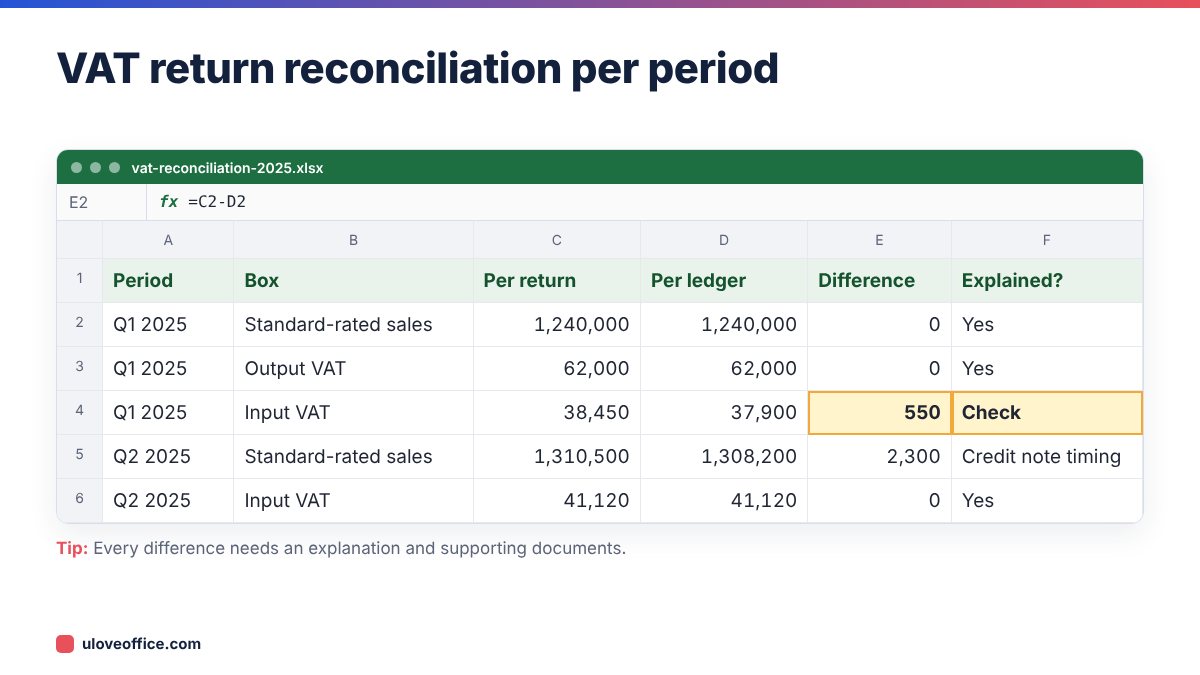
This is the most important preparation step. For every VAT return in the audit period:
- Output VAT: does the sales figure on the return match the sales in your ledger for that period? Does output VAT match the VAT on your sales invoices?
- Input VAT: does input VAT claimed match the VAT on valid purchase tax invoices and import declarations? Were any non-recoverable items (such as entertainment) excluded?
- Zero-rated and exempt supplies: do you have evidence (export documents, contracts) supporting each?
- Emirate split: is the split of sales by emirate supported?
For corporate tax, reconcile taxable income on the return to the financial statements and check that every adjustment and relief is documented.
Step 4: Gather and index documents
Typical requests include:
- Sales and purchase tax invoices, credit notes and debit notes.
- General ledger, trial balance and financial statements.
- VAT account and return working papers.
- Bank statements.
- Customs declarations and import/export documents.
- Major contracts with customers and suppliers.
- Fixed asset register.
- Payroll records (for corporate tax and to support some VAT positions).
- Records for related-party transactions.
Organise them so any document can be found quickly:
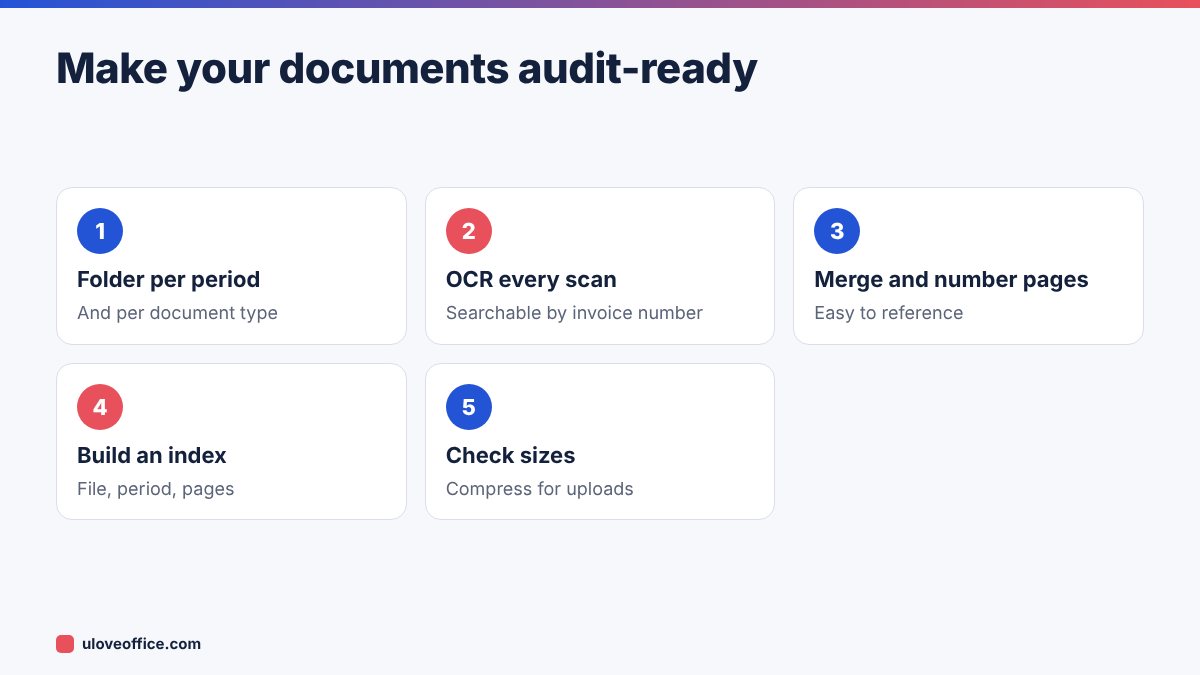
- Create a folder per period and per document type.
- OCR scanned documents with OCR PDF so they are searchable.
- Merge related documents with Merge PDF, for example all invoices for one supplier in one quarter.
- Add page numbers to large files, so you can refer to “page 47” in replies.
- Create an index spreadsheet listing every file, period, description and page range.
- Compress large files with Compress PDF if they must be uploaded to a portal.
Step 5: Review high-risk areas
Before the auditor arrives, review areas that commonly produce findings:
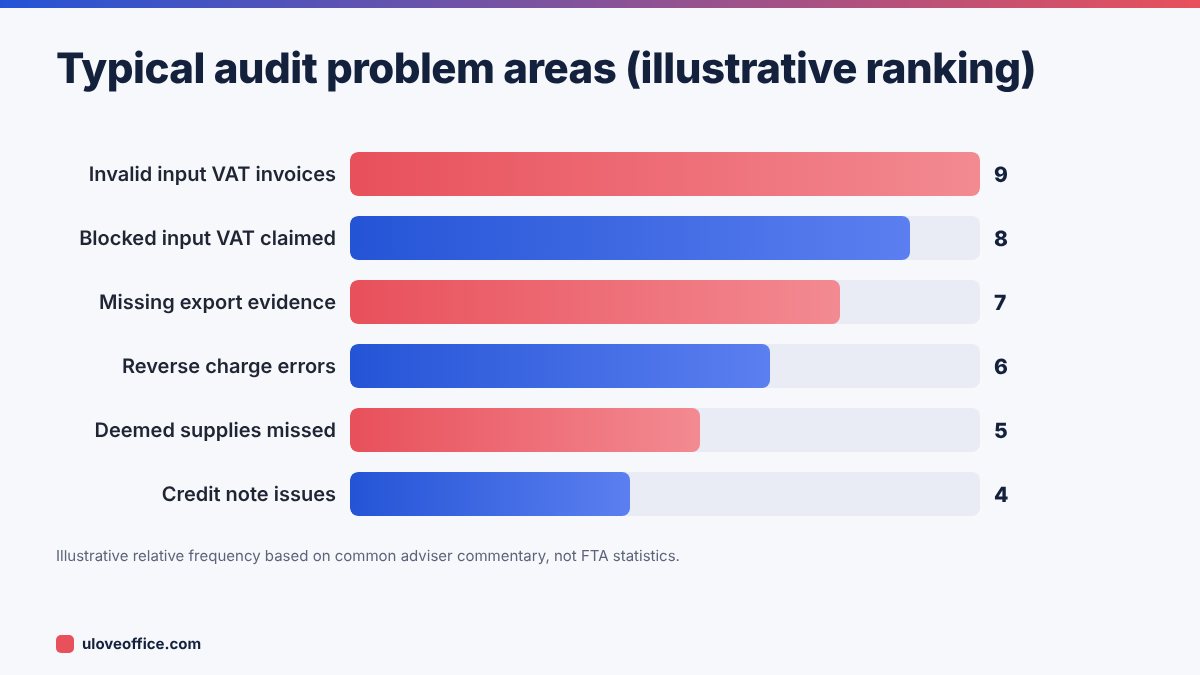
- Input VAT on invalid invoices: invoices missing the supplier TRN, wrong buyer name or simplified invoices used for large purchases.
- Blocked input VAT: entertainment, personal use of vehicles and staff benefits that are not recoverable.
- Zero-rated exports without evidence of export.
- Deemed supplies: gifts and goods used for non-business purposes.
- Late or missing reverse charge on imported services.
- Credit notes without proper documentation.
- Related-party pricing not at arm’s length, for corporate tax.
If you find an error, take advice. A voluntary disclosure before the audit begins can reduce penalties in some situations.
Step 6: During the audit
- Be professional and cooperative. Provide a quiet room, internet access and a contact person.
- Answer the question asked. Short, accurate answers are best. If you do not know, say you will check and reply.
- Track every request in a log: date requested, description, due date, date answered, documents provided.
- Keep copies of everything you provide.
- Respond on time. If you need more time, ask before the deadline.
- Do not create documents after the fact to fill gaps. Explain missing items honestly.
Step 7: After the audit
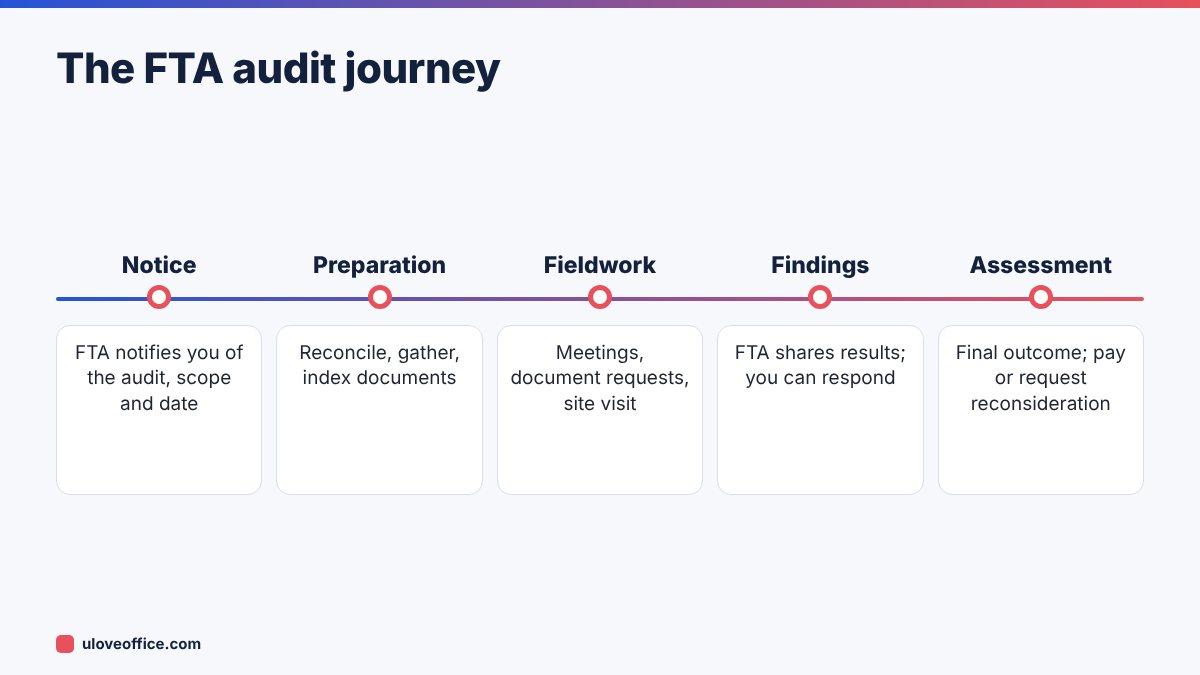
The FTA will share its findings. If there are adjustments, you will receive an assessment, which may include tax due and penalties. You have the right to request a reconsideration within the legal deadline if you disagree, and further appeal routes exist. Take advice from a registered tax agent or lawyer before the deadline.
Whatever the outcome, hold a short internal review: what caused findings, and what process changes will prevent them next time?
Common audit findings in UAE SMEs
How to answer information requests well
During an audit, the FTA sends requests for documents and explanations. The quality of your replies shapes the auditor’s view of your business. For each request:
- Restate the request at the top of your reply so it is clear what you are answering.
- Answer directly in a few sentences, then list the attached documents with file names and page numbers from your index.
- Explain differences with numbers: “The AED 2,300 difference in Q2 sales relates to credit note CN-114 dated 30 June, recorded in the ledger on 2 July. Attached: CN-114 and the ledger extract, pages 3–4.”
- Do not over-share. Provide what is requested. Volunteering unrelated documents can widen the scope.
- Keep the tone factual. Avoid arguments in the first reply; save technical disagreements for after you have seen the findings.
A sample request log
Keep a simple log in Excel with these columns: request number, date received, description, due date, owner, status, date answered and documents sent. Review it daily during fieldwork. The log protects you if there is later disagreement about what was provided and when, and it helps your tax agent see the full picture quickly.
Preparing your team
Brief everyone who might speak to the auditor: the finance team, the warehouse manager if there is a site visit, and senior management. Explain the scope, who the coordinator is, and that all document requests should be passed to the coordinator. Staff should answer factual questions about their own work honestly and refer anything else to the coordinator, rather than guessing.
📘 Continue reading
Frequently asked questions
How much notice does the FTA give?
The Tax Procedures Law requires advance notice for audits at your premises, with exceptions in specific circumstances. The notice states the date.
Can I use a tax agent?
Yes. Registered tax agents can represent you before the FTA and are often helpful in audits.
What if records are in Arabic and English?
That is fine. If documents are in another language, the FTA may request a translation.
How far back can the FTA audit?
Generally within the statutory period, which is linked to the record-keeping period, with longer periods possible in cases such as tax evasion. Ask your adviser for specifics.
Keeping audit-ready all year
The best audit preparation happens before any notice arrives. Reconcile every VAT return to the ledger when you file it, not years later. File supporting documents monthly in the folder structure you would use for an audit. Review input VAT on large purchases before claiming it. Keep a short memo for any unusual transaction explaining the VAT or corporate tax treatment and why. Then, if an audit notice comes, most of the work is already done.
Finally, remember that an audit is also a chance to improve. Many businesses come out of their first FTA audit with better invoice controls, cleaner reconciliations and a clearer split of responsibilities, which makes every later VAT return and corporate tax filing faster and safer.
Key takeaways
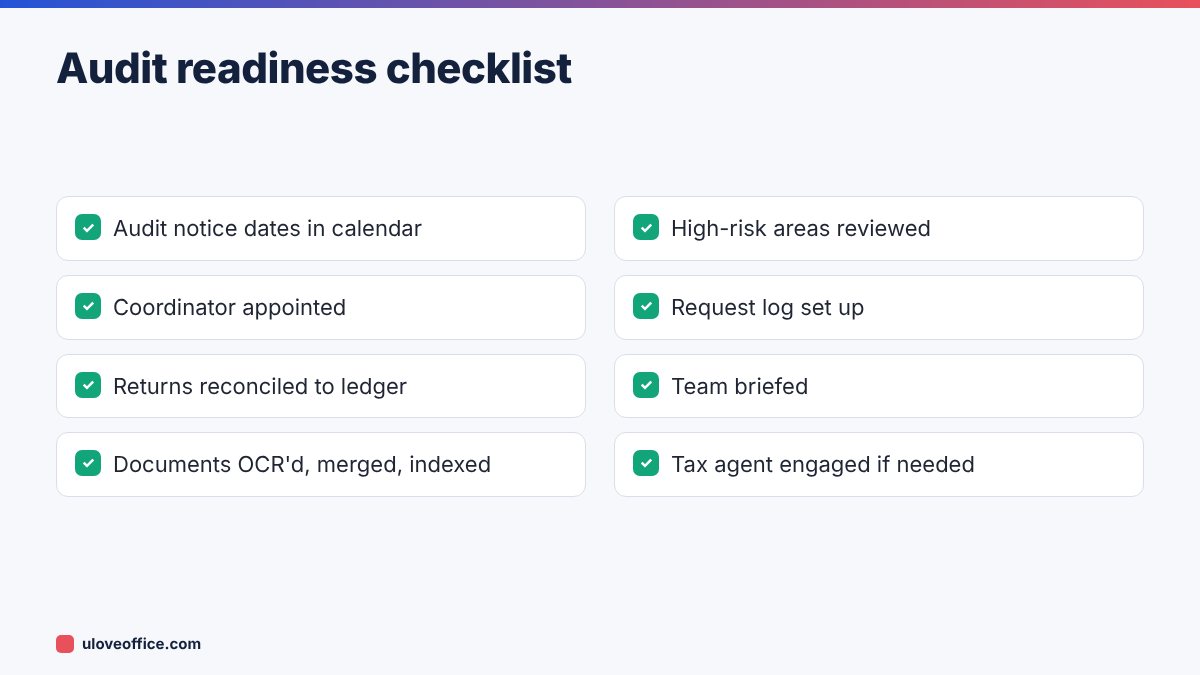
- Read the audit notice carefully and appoint one coordinator.
- Reconcile every return in the audit period to your books before fieldwork starts.
- Index all documents so any request can be answered quickly.
- Review high-risk areas such as input VAT on invalid invoices and blocked expenses.
- Keep a request log and respond on time; ask for extensions before deadlines.
Conclusion
An FTA audit is a test of your records. Read the notice, appoint one coordinator, reconcile every return to your books, gather and index documents, review high-risk areas, respond on time and keep a log. Businesses that keep searchable, well-organised records all year find audits short and uneventful.
This article is general information, not tax advice. Last checked: 9 November 2026. Consult a registered tax agent for your specific case.